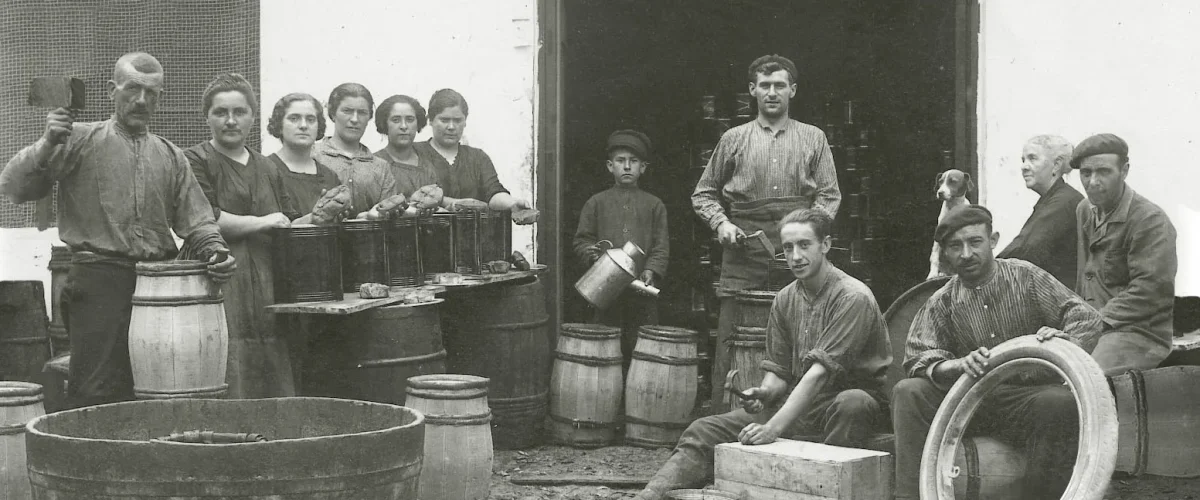
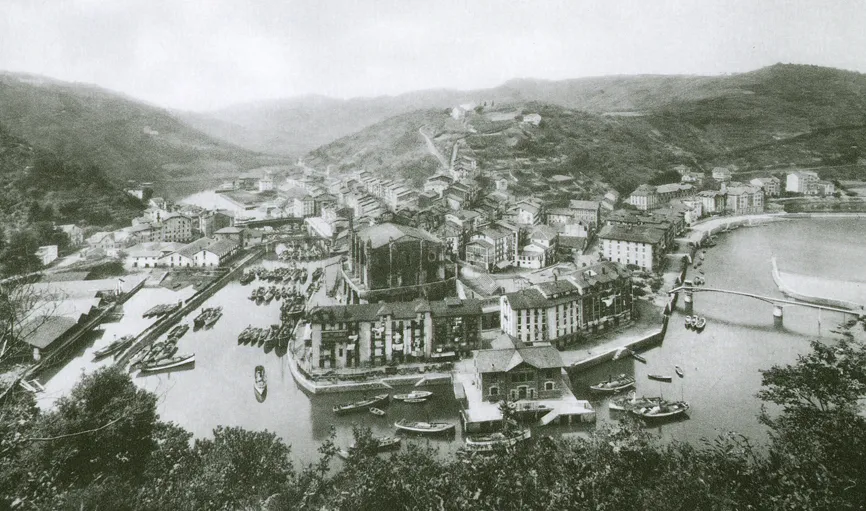
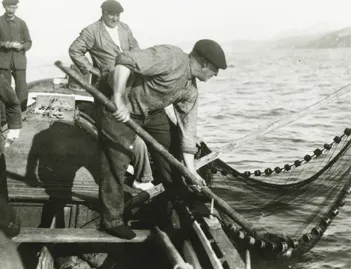
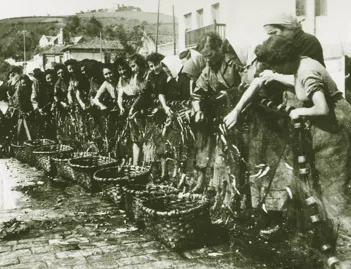
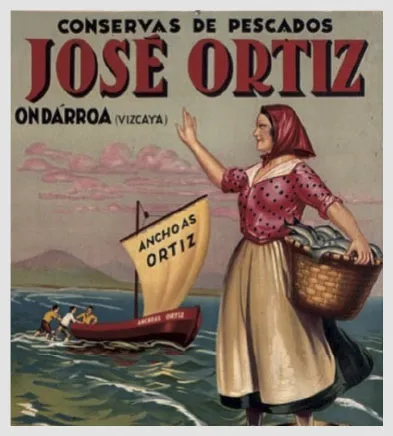
Since the beginning, our history has been linked to traditional fishing and respect for the sea. The path that has taken us from being a small canning company on the Basque coast to what we are today goes through five generations of the Ortiz family, who back in 1891 began to elaborate White Tuna in escabeche in Ondarroa, Vizcaya.
The story of Conservas Ortiz begins in the 19th century. Following the death of Lázaro Nafarrate in 1850, his daughter, Higinia Nafarrate, married Antonio López de Aréchaga and together they had a daughter, Petra López de Aréchaga Nafarrate.
Years later, in 1891, the founder of Conservas Ortiz, Bernardo Ortiz de Zárate left Ondarroa for Álava with the idea of setting up a new business. He married Petra López de Aréchaga Nafarrate , and they had a son, José.
Bernardo learned his trade from his brother-in-law and began a career in the canning industry.
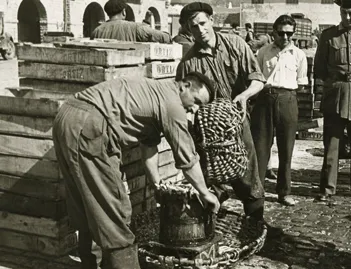
His job was to purchase anchovies and north coast tuna from the coastal fishermen in the harbours, and, using pickle and wooden barrels to preserve the fish, he was able to sell them the following day throughout the north of the region of Castile.
He invented and implemented a system of mobile factories which worked exclusively on the coast with the aim of maximising the company’s performance.
Viuda de Ortiz e hijo
After Bernardo died, his wife, Petra, took charge of the business. At that point the company was renamed ‘Viuda de Ortiz e hijo’ (‘Ortiz’s widow and son’).
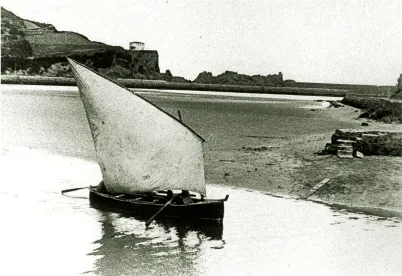
At that time, vessels did not have great autonomy or refrigeration systems, so they would typically load ice at ports before setting out to fish for bonito, and once the catch had been made, they would unload at the nearest port.
The bonito season, that is, the optimal time for its catch, takes place during the summer months, when temperatures are highest, making it essential for the fish to reach port in good condition for sale. Once there, it was prepared as a semi-preserved product in escabeche; thanks to the acidity of the vinegar, this allowed it to be transported to inland areas with higher demand, such as Castile, Madrid and Aragón.
Anchovies: The star product
At the beginning of the 20th century, Conservas Ortiz began to make its mark worldwide. Canning companies began to set their sights on Italy and countries with Italian immigrant populations such as the United States, Canada, Australia, New Zealand, and South Africa. Anchovies were the star product. The Italians brought their “alla vera carne” salting technique (using very little salt between layers of anchovies), to Cantabria: they knew that the region’s coast offered the very best fish. Here, they could produce semi-preserved fish products and send them back to Italy.
The Italians brought their “alla vera carne” technique
In 1942, José Ortiz and his son, José Antonio Ortiz, created the limited company which would later become Conservas Ortiz S.A. in 1956. The fifth generation of the same family manages the company today.
Where we are today
At Conservas Ortiz we have great respect for tradition, coastal fishing based on the tides, and the exclusive purchase of north coast tuna which are line-caught, one-by-one. And our careful handling of the fish we use yields a product distinguished by its high quality.
The preparation of our first-class preserved products can be appreciated in the care we take in presenting them in beautiful, old fashioned packaging.